To me, fat grafting to the face is not a major operation. The whole process uses needles: a small amount of fat is drawn out, then injected with a needle into the areas of the face that need it. How much swelling and bruising you have, and how quickly you recover, varies from person to person, and early reduction in swelling does not mean the fat volume has fully settled. Unlike liposuction for breast augmentation, the face needs far less fat, so recovery at the harvest site (such as the thigh or abdomen) is shorter, usually within two weeks, though this still varies from person to person.
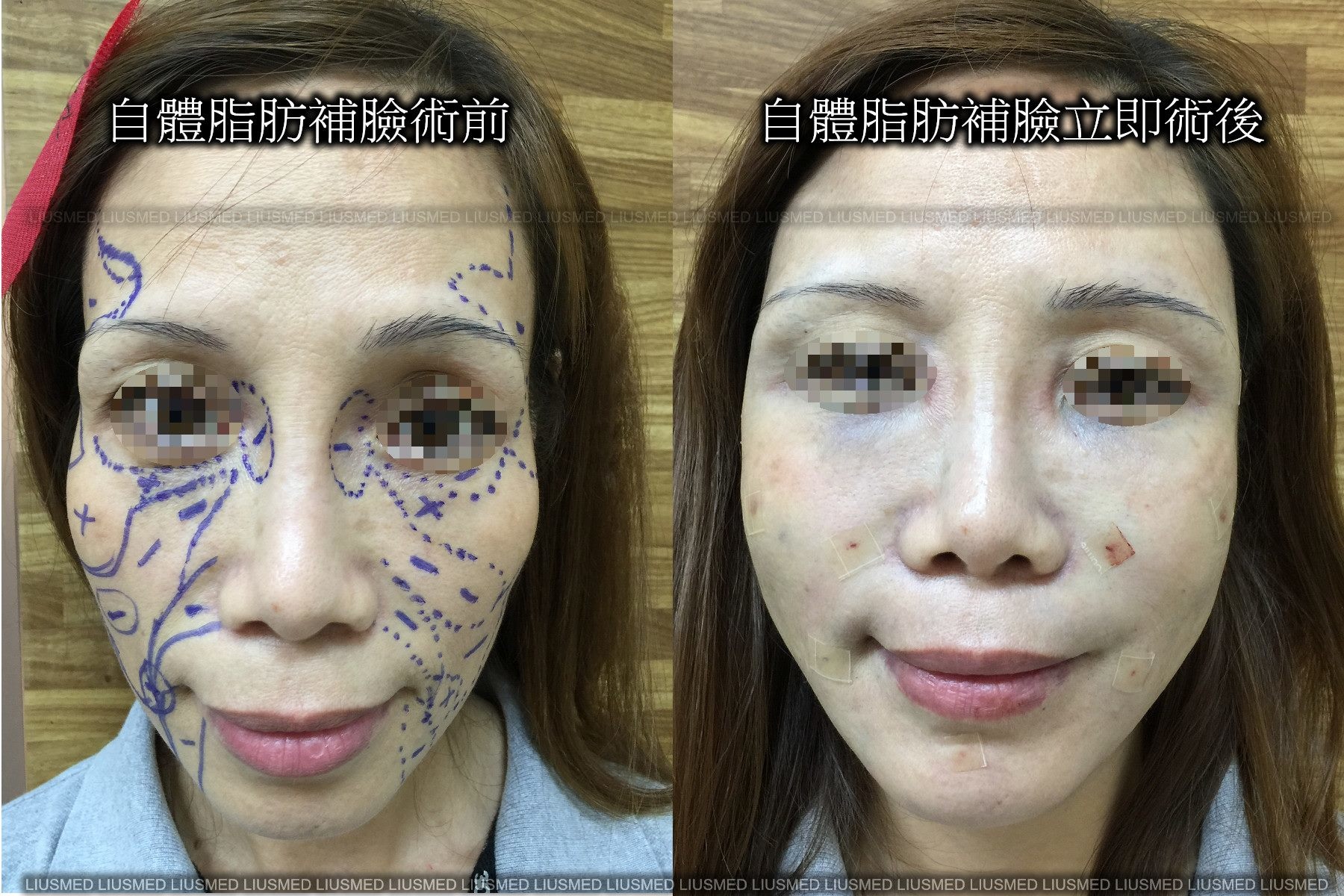
(Above) Before and after facial fat grafting. You can see the hollows before treatment, and the swelling and bruising under the eyes right after the procedure, which lasted about a week (this varies from person to person). Can you guess which areas she had filled? The answer: temples, eye sockets, apple cheeks, tear troughs, nasolabial folds, cheeks, marionette lines, and chin! Doesn’t she look much younger?
Good liposuction requires the ability to sculpt three-dimensional curves and shape the overall contour. It is not about scooping out one patch of fat from the inner thigh while ignoring how it flows into the areas above and below, which ruins the overall look. The same goes for harvesting fat for the face. Because only a small amount of fat is needed, in the hands of an experienced doctor the chance of the harvest site ending up lumpy or uneven is lower. It is a test of the doctor’s sense of aesthetics, technique, and judgment. Many people come to me for body contouring, and it would be a waste not to use the fat we remove, especially thigh fat, which is very good-quality fat. That is why many people choose to have it transferred to the breasts or face.
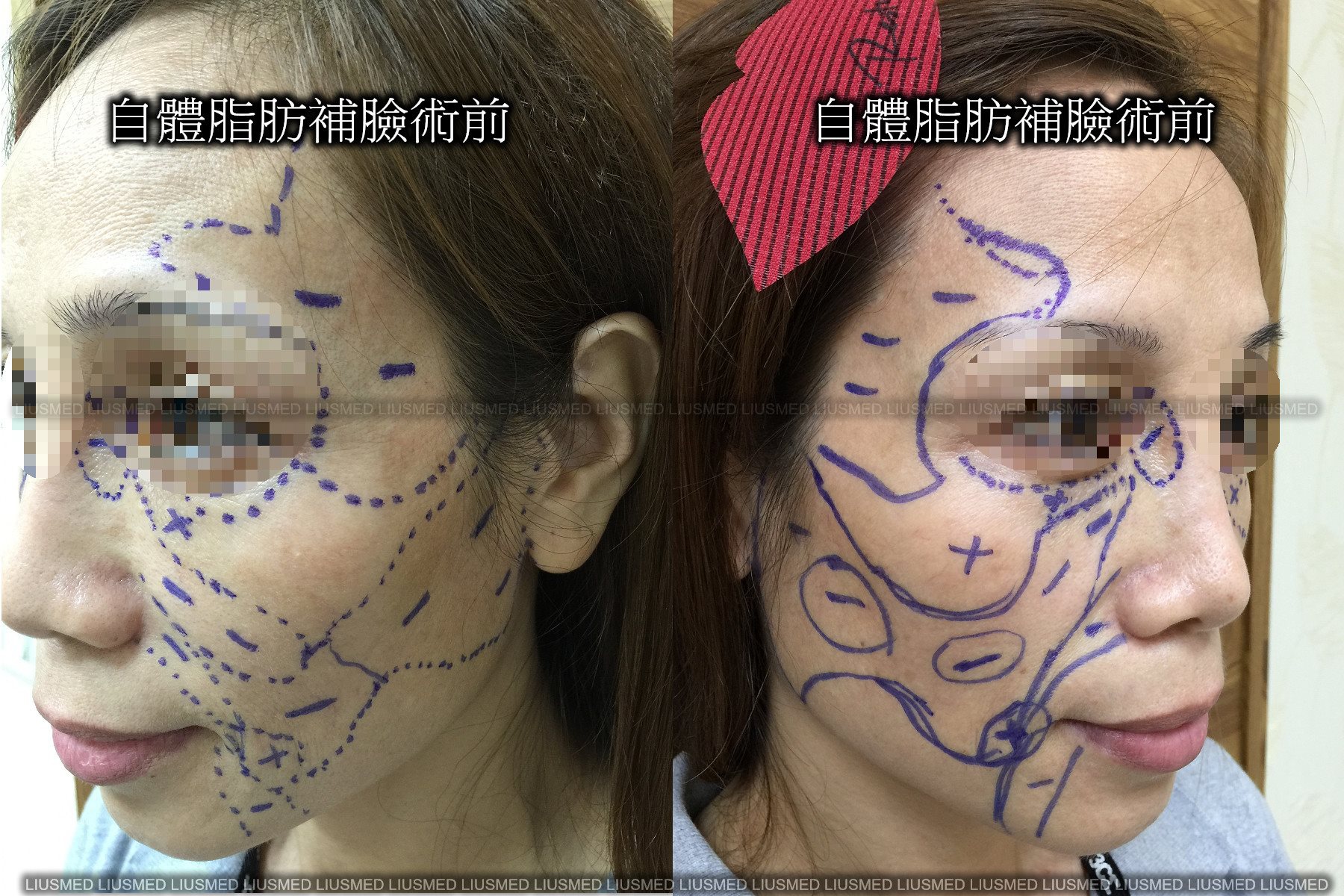
(Above) One solution for a thin, hollow face: facial fat grafting! Before the procedure, I mark the face to outline every hollow area.
Here is why my fat grafting achieves good survival:
-
Gentle liposuction means less fat is lost, which improves survival.
-
The fat is purified carefully, removing unwanted fibers, blood, damaged fat, and other impurities. Only live, pure fat is kept and transferred to the face or breasts.
-
Fat is injected in tiny droplets to maximize contact between the fat cells and living tissue, which improves cell survival.
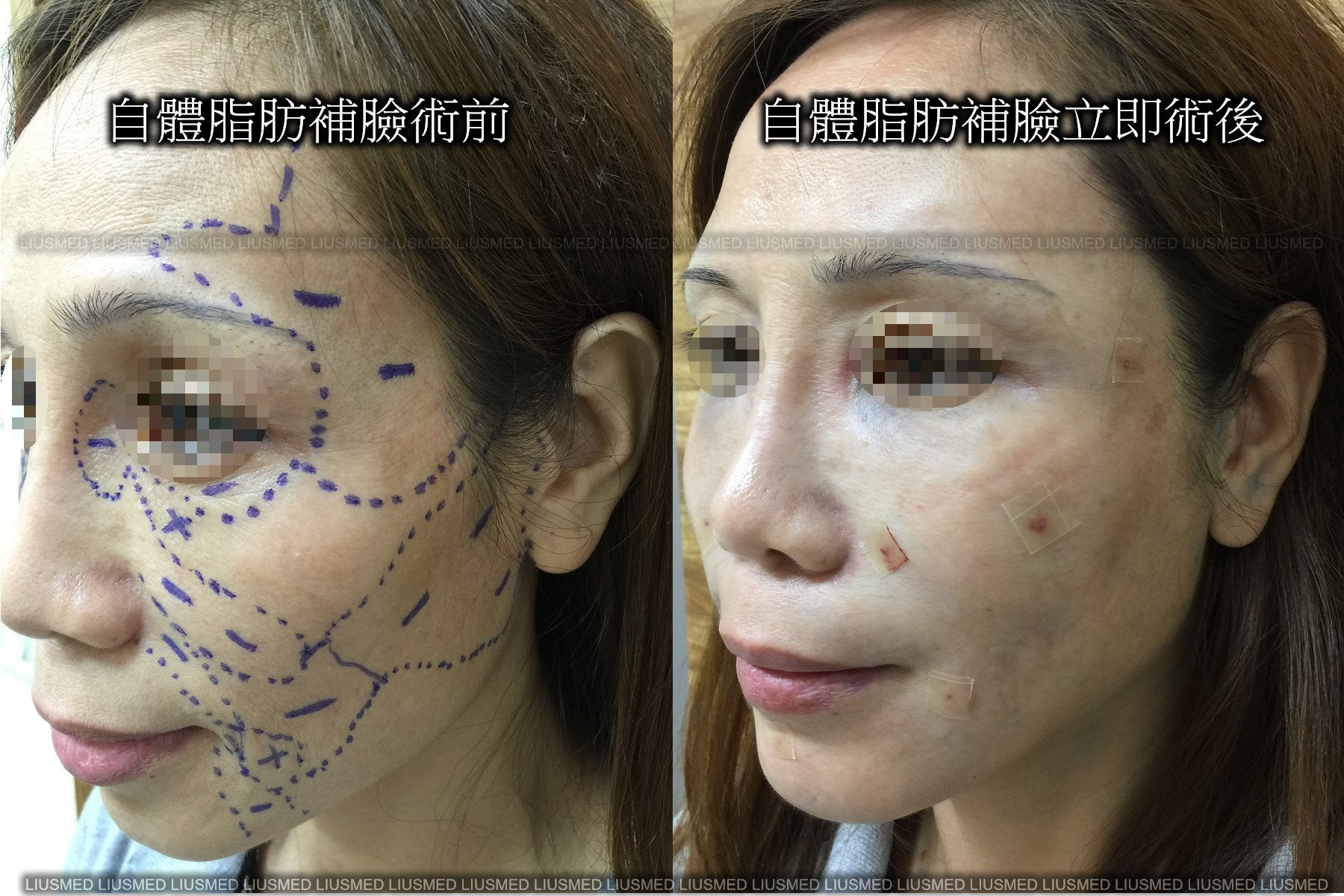
(Above) Facial fat grafting does not need much fat. About 100 cc of fat is drawn from the abdomen or thigh with a needle, then injected with a needle into the areas of the face that need it. The needle entry points are covered with a hydrocolloid dressing. A little oozing right after the procedure is normal. The needle marks heal after about a week, though this varies, and no stitches are needed.
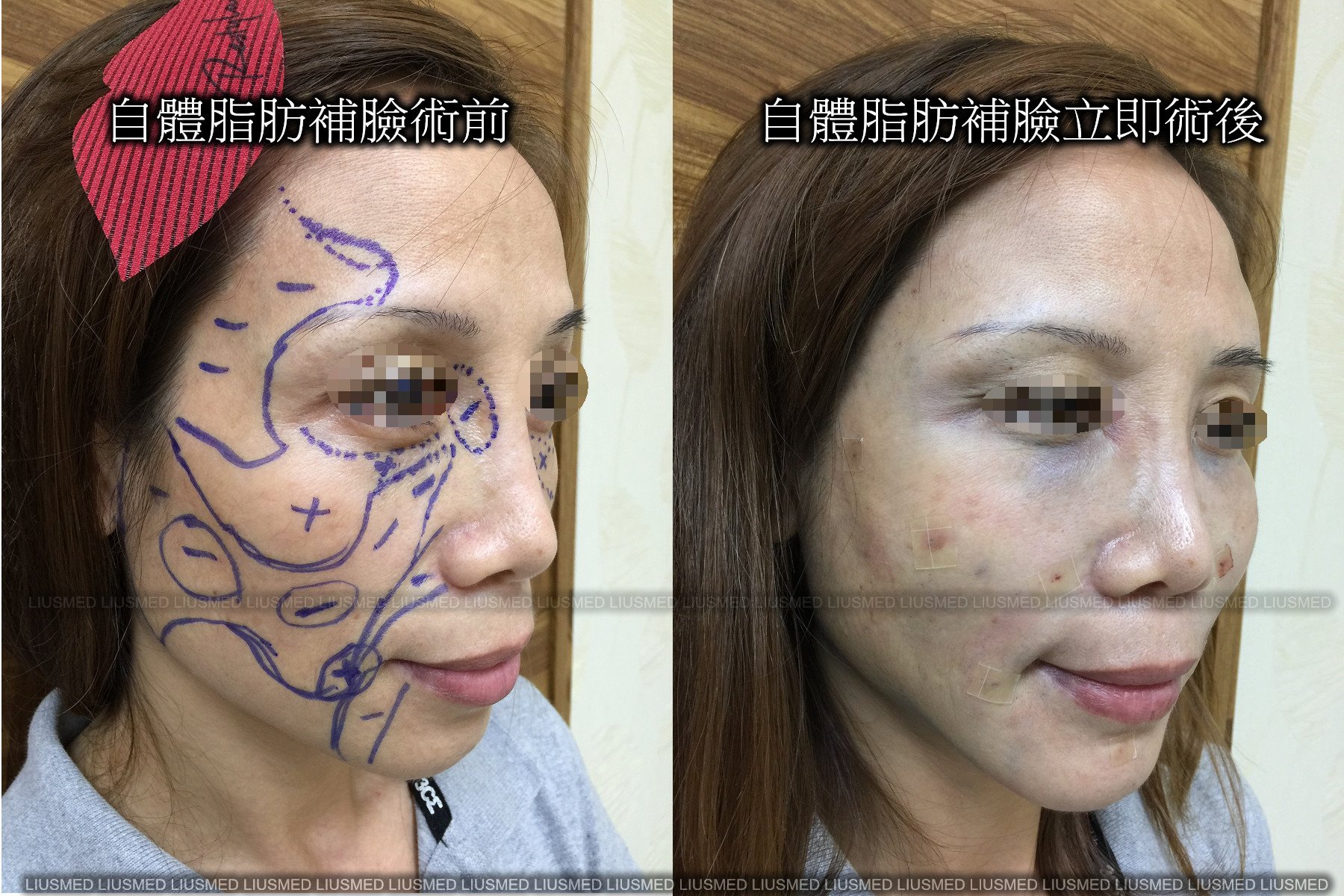
(Above) Facial fat grafting is a treatment that helps the face look younger. There will be bruising and swelling afterward, and recovery time varies from person to person. When my patient and the friend who came with her looked in the mirror after the procedure and both gasped in delight, I was just as happy.
Recovery after the procedure:
The harvest site is sore for about 1 to 2 days. It is covered with a waterproof dressing, so you can shower as usual. Bruising lasts about 2 weeks and swelling about 1 week, though this varies from person to person, while fat retention and contour need to be followed up at later visits. During the care period your doctor advises, avoid heavy massage and pressing hard on your face.
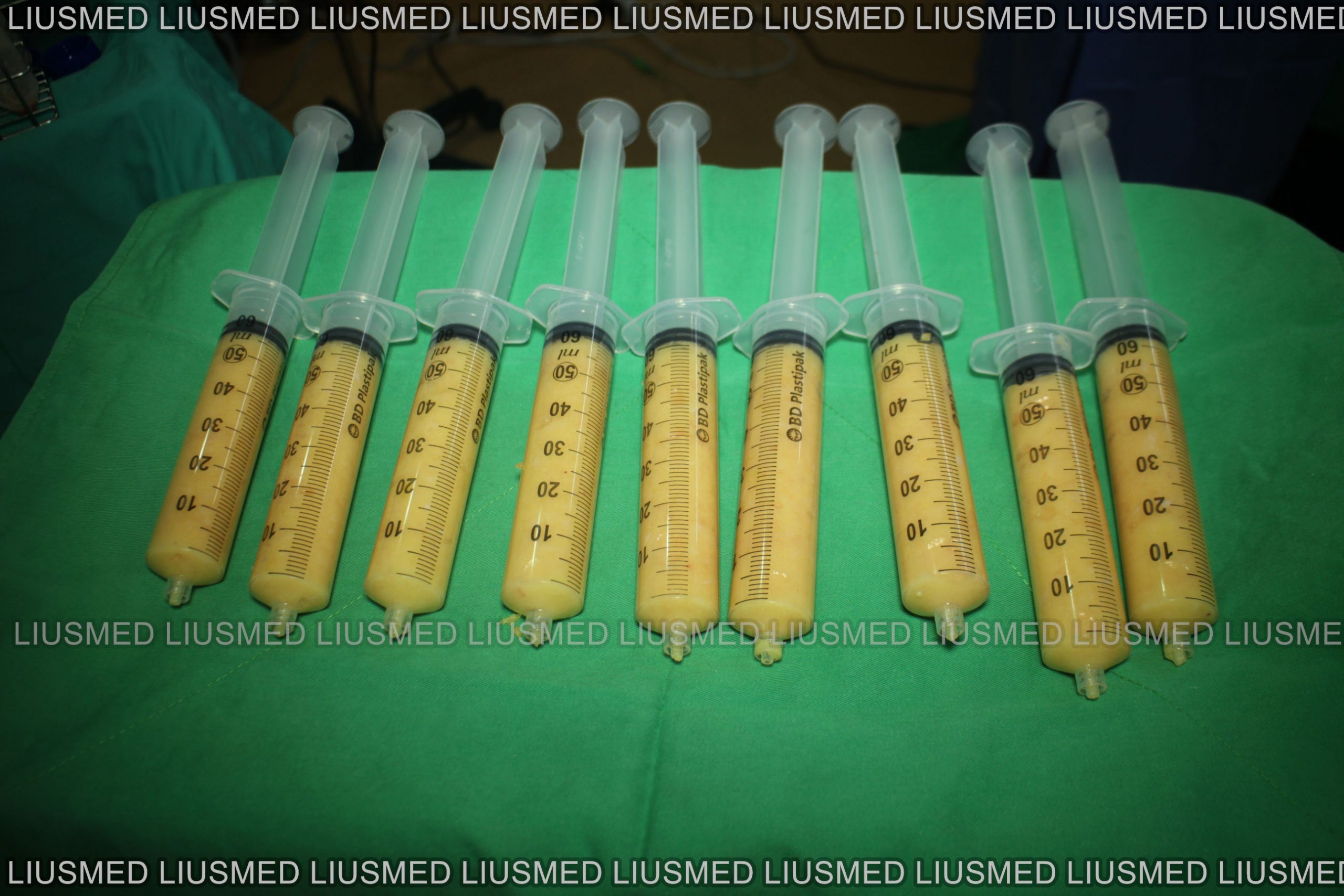
Golden "pure fat": the fat is purified carefully, removing unwanted fibers, blood, damaged fat, and other impurities to improve survival.
To judge how much fat has stayed, one month after the procedure is too early. At that point you can look at the early contour, but changes in volume and lines still need to be followed afterward. Fat retention differs from person to person, and there is no guarantee that nothing will change after the first month. Take a look: doesn’t it look natural, with smooth lines?
Here is something I often hear from patients: "Dr. Liu, I had fat grafting at another clinic before, but after a while it was completely gone."
Is that true? What I can say is that whether fat stays has a lot to do with the grafting technique, and also with each person’s constitution and changes in body weight.
In all the cases I have done, I have never seen the fat disappear quickly or completely. Survival has always been at least 50 to 60 percent. Before you have this procedure, ask around and compare carefully, so you don’t spend money and get no results.
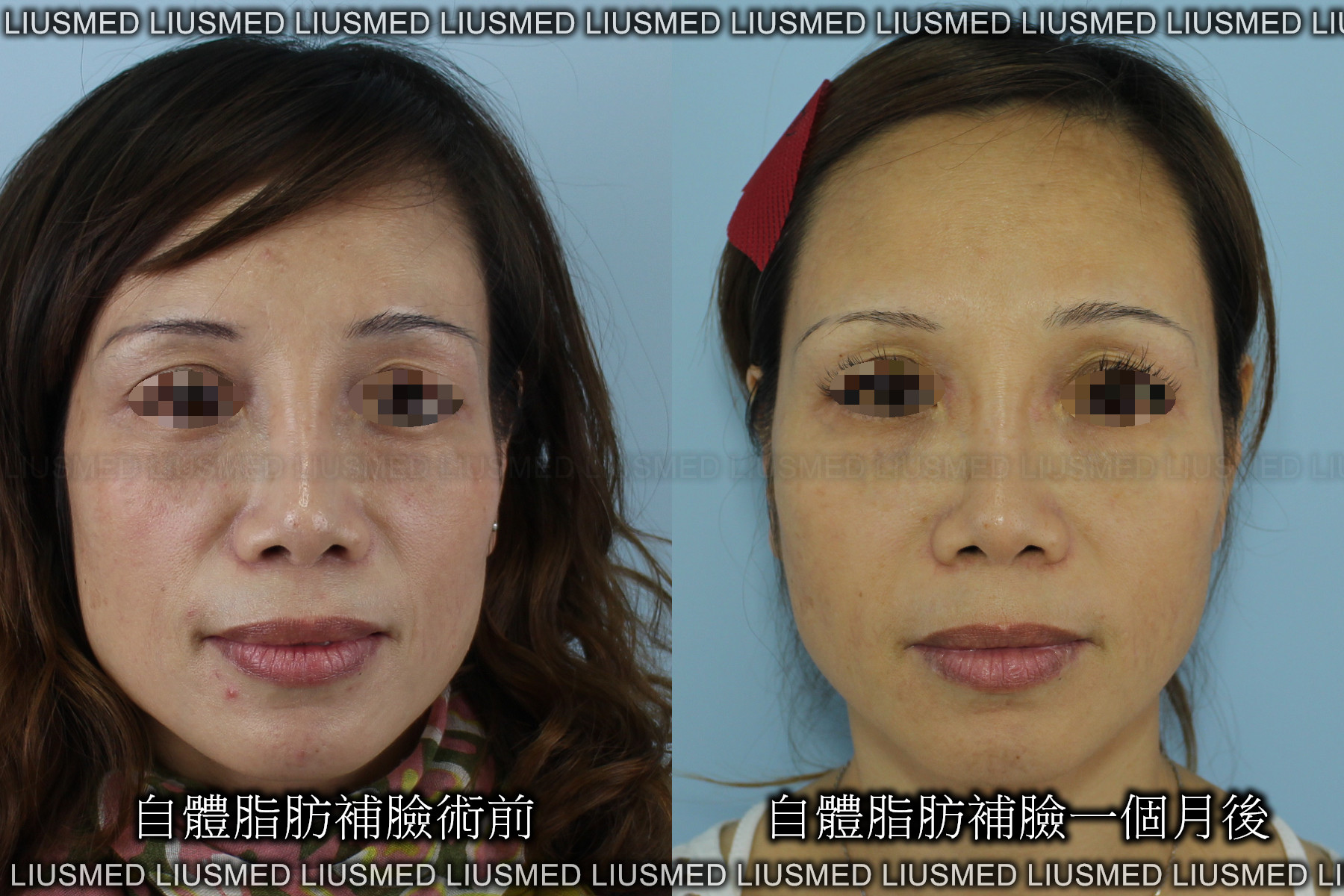
(Comparison one month after the procedure: the facial lines are much softer, the nasolabial folds and mouth-corner lines are shallower, the cheeks and temples are fuller, the side profile is smoother, the chin is better proportioned, and she looks younger and firmer overall.)
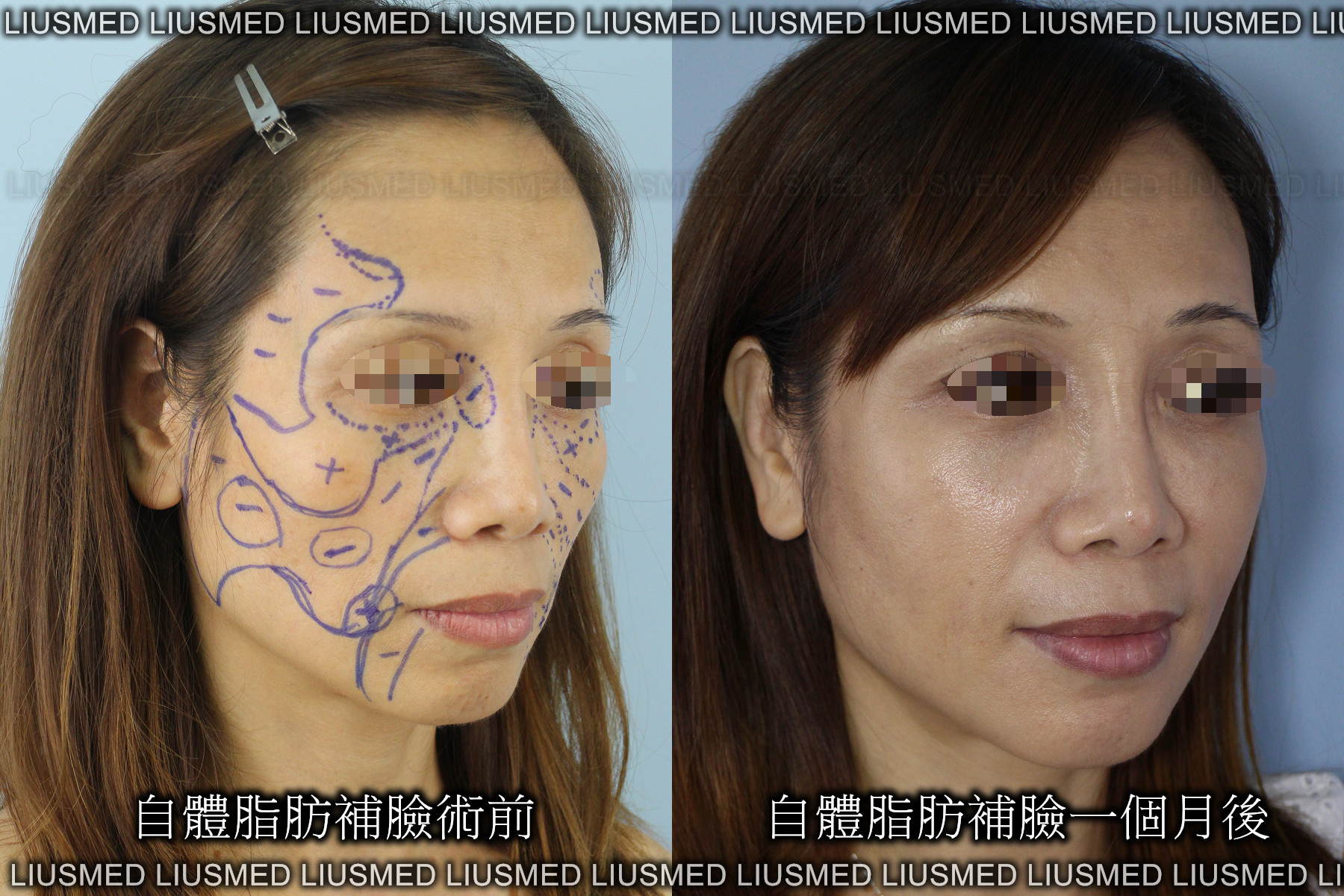
Her face is fuller, and the hollows of the nasolabial folds, marionette lines, and cheeks are much smoother. The chin is another highlight, and the overall face shape looks soft and elegant.
If you are researching liposuction and have decided to go ahead, compare carefully before the procedure. A doctor with extensive experience in liposuction and body contouring should still be your first choice, so you don’t end up regretting it afterward. If you have already had liposuction that went wrong, or you are unhappy with your contours afterward, I would be glad to assess you for repair and reconstruction.
Interested in body contouring? You may also want to read (in Chinese):
Liposuction revision: what to do about failed or uneven liposuction (in Chinese)
Circumferential thigh liposculpture and body contouring (in Chinese)
What to know about ultrasound-assisted liposuction (in Chinese)
Circumferential ultrasound-assisted abdominal liposuction revision surgery (in Chinese)
Ultrasound-assisted thigh liposculpture: a case (in Chinese)
Fat grafting breast augmentation: a TV shopping host’s cup-size upgrade (in Chinese)
Rising drama star Chung Ya-ju: a peach-shaped butt and slimmer upper arms (in Chinese)
Who says very thin people can’t have liposuction and breast fat grafting? (in Chinese)
Dr. Ta-Ju Liu