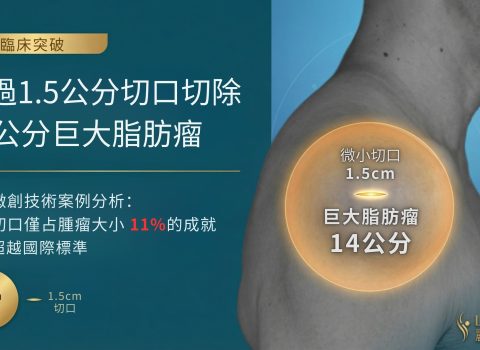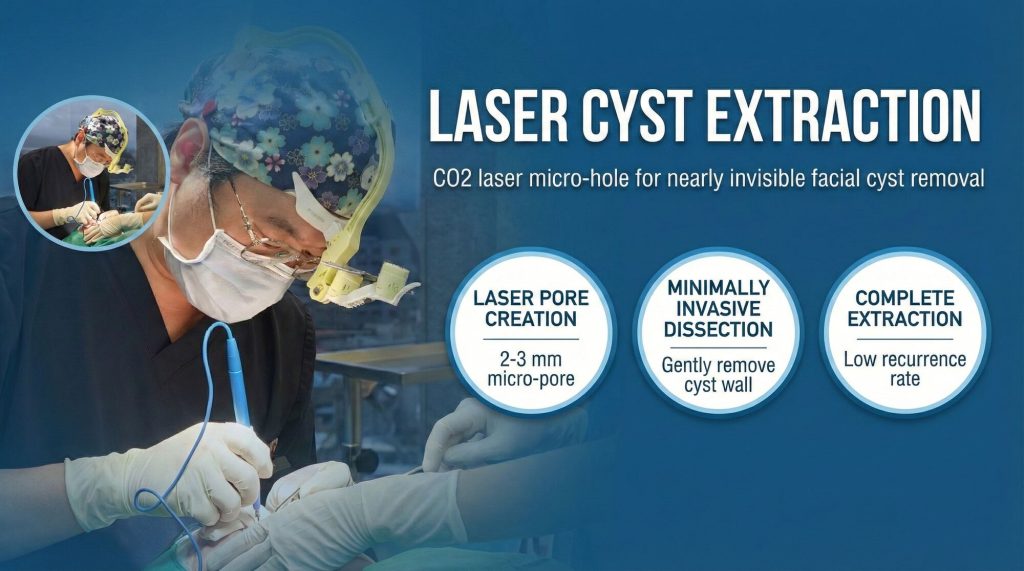
For small to medium-sized epidermal cysts (0.5-1.5 cm) on the face or neck, Dr. Liu TaJu at Liusmed Clinic utilizes the “CO2 Laser Punch Excision” technique. This method replaces the traditional scalpel incision with a precise 2-3mm laser-created micropore. This allows for the complete dissection and removal of the cyst wall with virtually no bleeding. Post-operative suturing is rarely needed (or requires only a single stitch), and the wound heals into a faint, acne-like mark, significantly improving aesthetic outcomes.
| 2mm | 3,000+ | <5% | 0 |
| Pore Size | Successful Cases | Recurrence Rate | Sutures Needed (Mostly) |
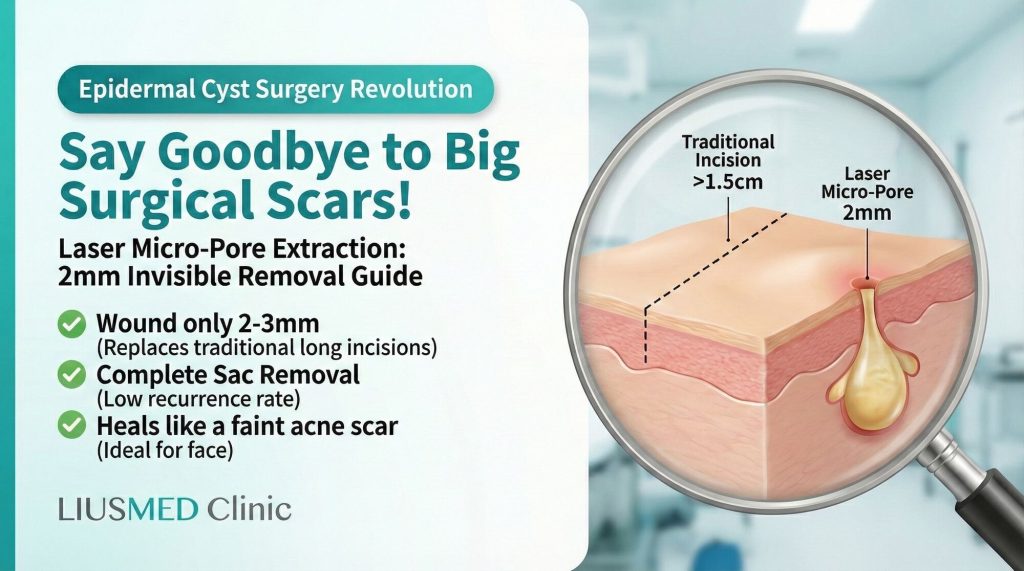
Is Surgery Necessary? A New Option with Laser
Epidermal Cysts (often called sebaceous cysts) are the most common benign skin tumors. Many patients, especially those with cysts on their face or neck, delay treatment because they fear the long “centipede scar” left by traditional surgery, only to watch the cyst grow larger over time.
“For giant cysts, standard minimally invasive surgery is necessary. However, for small to medium cysts (under 1.5cm), we have a more elegant solution—combining CO2 laser punching with micro-dissection. It allows us to trade the smallest possible wound for the most complete removal.”
— Dr. Liu TaJu
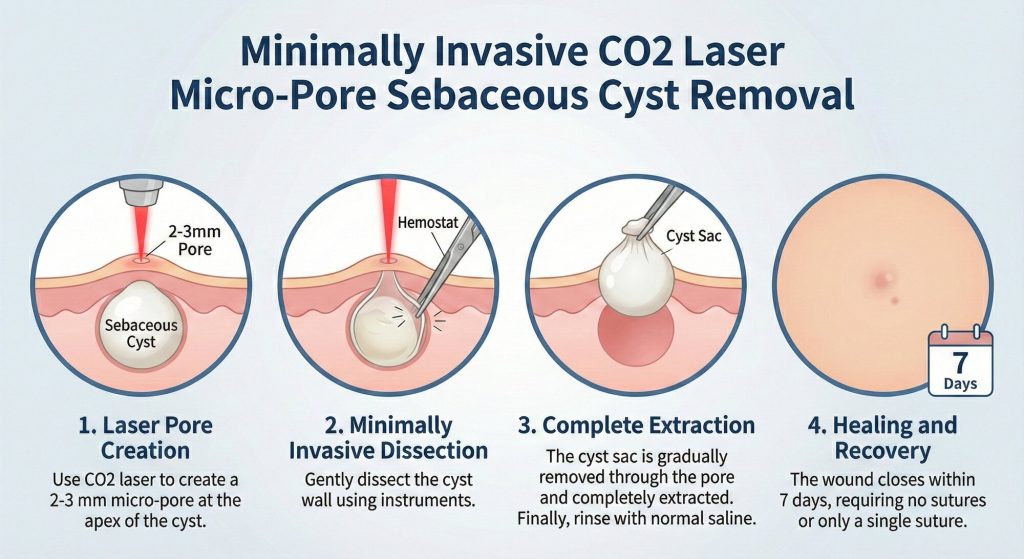
Core Technology: How to Extract a Cyst from a 2mm Pore?
The core of this technique lies in not using a scalpel to slice the skin, but rather using advanced laser technology combined with microsurgical skills.
Step 01. Laser Punching
The physician uses a CO2 Laser to create a precise, circular hole (approx. 2-3 mm in diameter) at the apex of the cyst. The high temperature of the laser instantly vaporizes tissue and coagulates blood vessels, keeping the surgical field extremely clear.
Step 02. Micro-Dissection
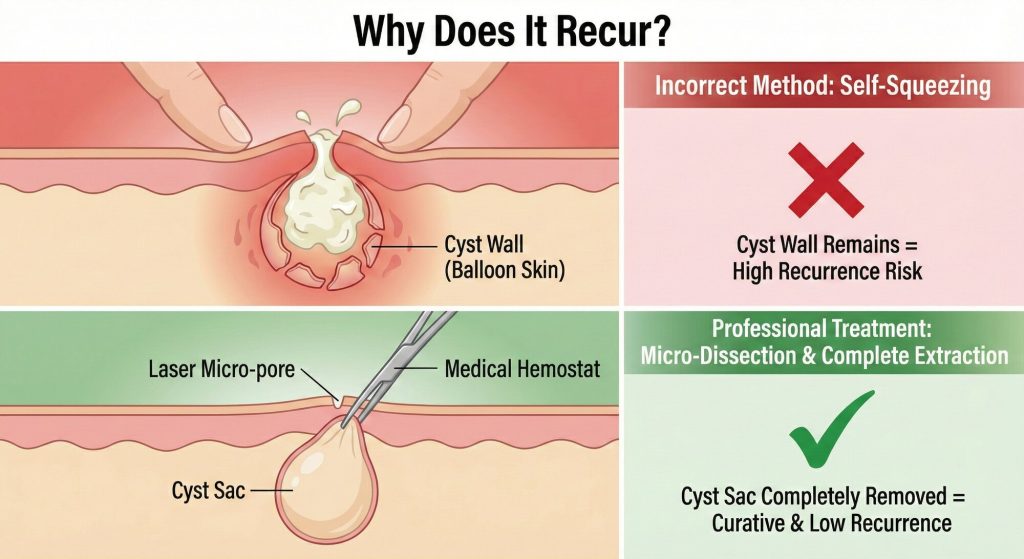
This is the most technically demanding step. Through this tiny laser pore, the physician inserts microsurgical instruments to gently dissect and separate the cyst wall (sac) from the surrounding subcutaneous tissue. This step is critical; if the dissection is incomplete, residual cyst wall tissue will lead to recurrence.
Step 03. Cyst Extraction
Once the cyst wall is fully loosened, forceps are used to drag the entire sac (including the capsule and contents) out through the small pore. Think of it like pulling a deflated balloon through a keyhole—it preserves skin integrity while achieving a radical cure.
Technical Advantages: Why a Round Hole is Better
Many patients ask: Why is a small round hole easier to work with than a straight cut?
- Superior Visibility & Access: Although the hole is small, a “circular” structure is physically easier to prop open than a narrow “linear” incision. This provides an unexpectedly wide field of view, allowing the doctor to easily drain contents and remove the wall.
- Minimal Bleeding: The CO2 laser provides a thermal hemostatic effect while punching the hole. A clean, bloodless field allows the doctor to precisely identify the cyst wall borders.
- Aesthetic Improvement: Traditional surgery leaves a linear scar that can widen if tension is not managed well. Laser punch excision typically leaves only a shallow, dimple-like mark that resembles a faded acne scar, making it virtually unnoticeable on the face.
- Low Recurrence Rate: Recurrence is caused by leaving parts of the sac behind. As long as the cyst wall is completely removed via micro-dissection, the recurrence rate is as low as traditional surgery (<5%).
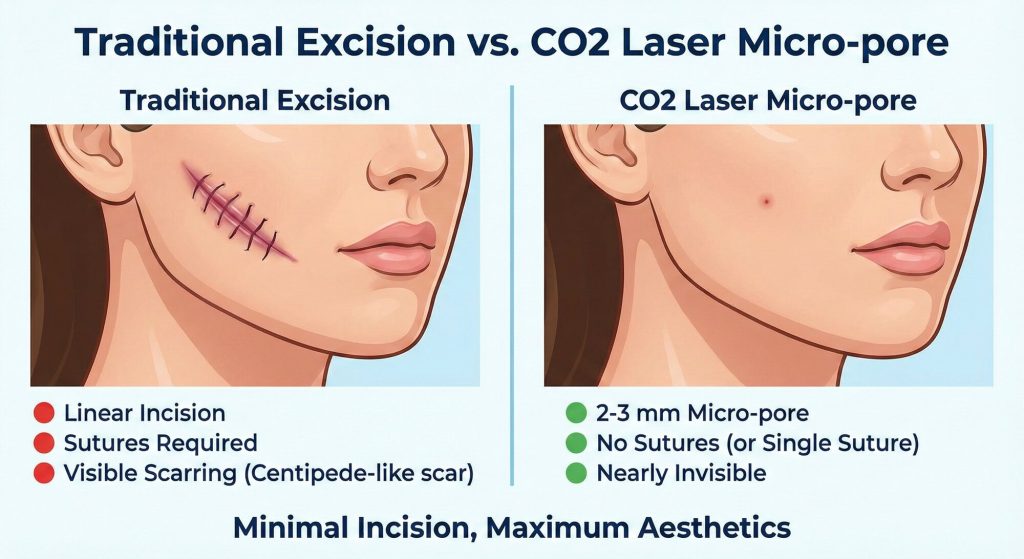
Comparison: Traditional Surgery vs. Laser Punch
| Feature | Traditional Excision | Laser Punch Excision |
| Incision Size | 1.0 – 3.0 cm (1.5x cyst diameter) | Fixed at 0.2 – 0.3 cm |
| Scar Appearance | Linear scar (risk of widening) | Dot-like mark (faint, like acne scar) |
| Bleeding | Moderate (requires electrocautery) | Minimal (laser coagulation) |
| Sutures | Required (must remove stitches) | Usually None (hydrocolloid dressing) |
| Procedure Time | Longer (layer-by-layer suturing) | Shorter (approx. 10-15 mins) |
| Best Locations | Trunk, Back, Giant Cysts | Face, Neck, Earlobes, Arms |
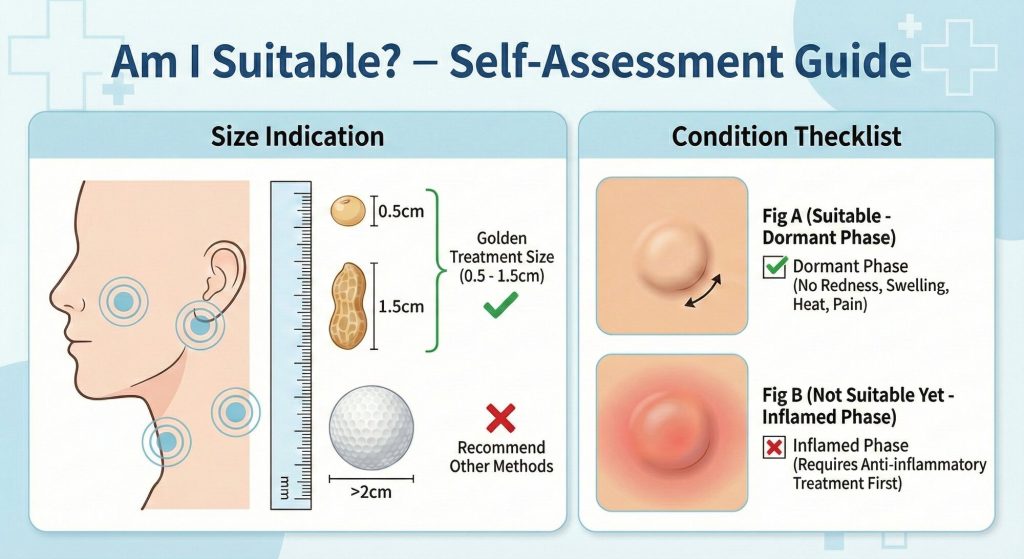
Candidates & Self-Assessment
While this technique is excellent, it is not a “cure-all.” Dr. Liu suggests this treatment is best for the following scenarios:
- Moderate Size: Diameter between 0.5 cm and 1.5 cm.
- Non-Inflamed: The cyst is in a “quiet” phase (no redness, heat, or pain). Inflammation makes the cyst wall fragile and difficult to extract intact.
- High Aesthetic Demand: Located on the face, neck, or earlobes where scarring matters.
- Good Mobility: The cyst moves slightly when pushed, indicating it is not severely adhered to surrounding tissue.
❌ When is Laser Punch NOT suitable?
- The cyst is larger than 2 cm.
- The cyst is currently inflamed or infected (requires antibiotics/drainage first).
- Severe adhesion from previous rupture or inflammation.
Post-Operative Care Guide
Post-op care for laser punch excision is simple, significantly reducing the burden on the patient:
- Wound Protection: The wound is tiny. We typically use a Hydrocolloid Dressing (Artificial Skin) to absorb fluids and protect the area.
- Changing Dressings: Change the dressing when it turns white and puffs up from absorbing fluid. Frequent changes may be needed for the first 3 days; afterwards, change every 1-2 days.
- Waterproofing: You can wash your face and shower normally while the dressing is on. Avoid soaking the wound directly (e.g., swimming, baths).
- Healing Time: The epidermis heals in about 1 week. Deep tissue may take 1-2 months to flatten completely. Sun protection is recommended after healing to prevent hyperpigmentation.
Frequently Asked Questions (FAQ)
Q: Does the laser punch hurt?
A: No. We administer a small amount of local anesthesia using a precision pain-control technique first. During the laser and dissection process, you will feel no pain, only a slight sensation of touch or pressure.
Q: Can you really clean out the cyst through such a small hole? Will it come back?
A: Yes. An epidermal cyst is like a water balloon. Once we squeeze the contents out, the volume shrinks instantly. The flaccid cyst wall can then be easily pulled out through the small pore. As long as the wall is completely removed, the recurrence rate is extremely low (<5%), comparable to traditional excision.
Q: Do I need stitches?
A: In most cases, no. The 2-3mm laser wound heals naturally. You only need to apply a hydrocolloid dressing. If the pore is slightly larger, the doctor may place a single stitch to ensure flat healing, which is removed in 5-7 days.
Q: My cyst is red, swollen, and painful. Can I do this surgery now?
A: No. When inflamed, the cyst wall becomes thin and brittle (like wet tissue paper), causing it to tear easily during removal. This prevents complete extraction. We recommend treating the inflammation first (oral antibiotics or injection) and waiting 2-4 weeks until the cyst becomes a hard, quiet nodule before operating.
Q: Can I pop it myself with a needle?
A: Absolutely not! Squeezing it yourself usually only expels the content (keratin/sebum), leaving the “sac” inside, so it will grow back quickly. Furthermore, squeezing forces bacteria deeper into the tissue, potentially causing severe cellulitis, which leads to larger surgeries and uglier scars later.
About the Author
Dr. Liu TaJu | Dean, Liusmed Clinic
- Specialties: Laser Punch Cyst Excision, Minimally Invasive Dermatologic Surgery, Scar Revision.
- Experience: Over 20 years of experience in minimally invasive surgery.
- Dr. Liu specializes in combining photoelectric laser technology with surgical techniques, insisting on “Classification-Based Treatment” to provide the most suitable removal plan for cysts of different sizes.